Pages

Tuesday, October 16, 2012

KARA WALKER


"I wanted to make work where the viewer wouldn't walk away; he would either giggle nervously, get pulled into history, fiction, into something totally demeaning and possibly very beautiful." --Kara Walker

Kara Walker (1969-) is a New York based artist, well known for her paper-cut silhouette works, which broach issues of race, identity, politics, and violence.


Walker's work first came to the public's attention when she was in her mid-20s, and she became the youngest artist to receive a MacArthur "genius" grant at age 27.


Specifically in relation to the plight of African American women in the antebellum South, Walker's room-size tableaux depict scenes from history, literature, and lore, adding a cinematic quality to the arrangement of life-size figures.


Walker works in many mediums, including gouache, animation and even shadow puppets.  In my opinion, her paper cut works are the most boldly thematic, zeroing in on the issues she raises through the stark contrast of black and white.


Upon immediate confrontation, the beautiful craftsmanship of the cut paper is striking.  The social, political, sexual, and violent themes come to light upon closer inspection.


Walker currently lives in New York City, where she is Professor of Visual Art at Columbia University's MFA program.


I'm wearing a Jill Stuart dress, Candela shoes, and a vintage leather clutch.


Photos by @kay_elle_pea.  Walker images from columbusmuseum.com, degenerationartstream.blogspot.com, nyclovesnyc.blogspot.com, and museumstudiesblog.blogspot.com.


Wednesday, September 26, 2012

CLOUD CITY


These photos were taken on the roof of the Metropolitan Museum of Art, where Tomás Saraceno's installation Cloud City currently resides, through November 4.  Saraceno creates environments out of scientific forms, breaking boundaries between art, science, and architecture.  This work challenges the way the participant interacts with his or her surroundings, and the roof of the Met is the perfect place to experience the mirrored structure, which allows viewers to ascend closer and closer to clouds themselves.

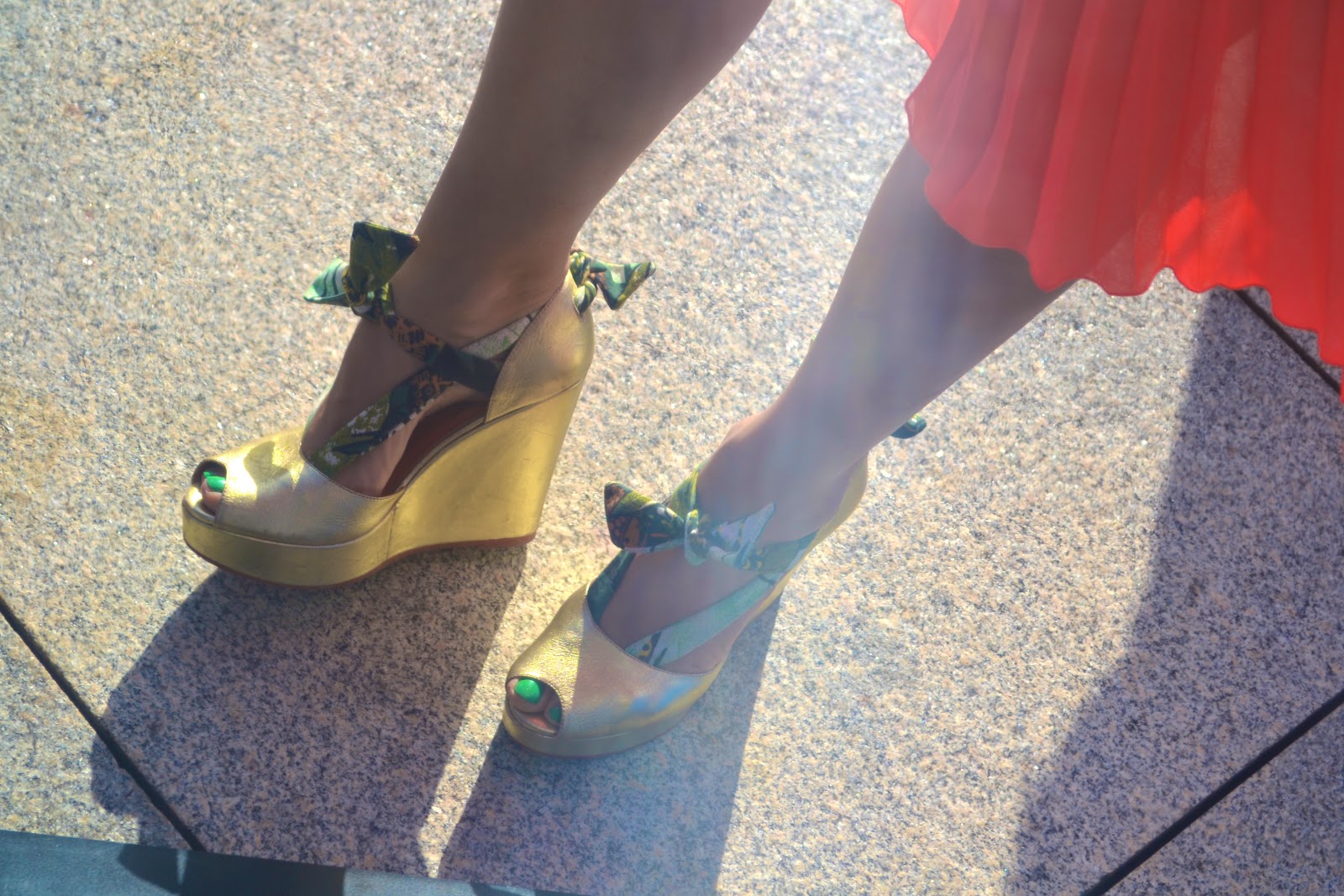
I'm wearing a Robert Rodriguez blouse, H&M skirt, Neon wedges, and Linda Farrow sunglasses.

Wednesday, September 12, 2012

THE JAPANESE BRIDGE


The work below is one of a series of twelve paintings of Claude Monet's footbridge at Giverny, a beloved subject of his work from the year 1899.  

Claude Monet,  Bridge over a Pond of Water Lilies, 1899

The bridge is recreated at the New York Botanical Garden for the exhibition Monet's Garden, on view through October 21.


I'm wearing a Zara dress, Theory shoes, and a Rebecca Minkoff bag.
 Thanks to Chelsea for the photos, @zkinslow for the .gif animation and metmuseum.org for the image.

Wednesday, September 5, 2012

RYAN MCGINNESS


Ryan McGinness (b. 1972) and I share more than just an appreciation of bright, contrasting colors and symbols.  


The artist and myself are both originally from Virginia Beach, VA, and now reside in New York, NY.


McGinness's large-scale silk screens (and other works in a multitude of media) combine visual forms and iconography that overlap to produce a web of signs and symbols.  I've always thought of these works as a sort of scavenger hunt of characters and meanings.


He has described the way that the culture of Virginia Beach is an inherent aspect of his work.


"I think my interest in [graphic language] comes from growing up in Virginia Beach, which has a surf and skate culture obsessed with branding and saturated with a cult of cool.  


"At an early age I recognized that the power of a logo...can change the value of an otherwise ordinary object like a surfboard or a t-shirt or a skateboard."


Reminiscent of the juxtaposition of high art and illustration of artists like Andy Warhol, McGinness's work brings together multiple disciplines, including graphic design, fine art, advertising, and signage.


I'm wearing an H&M dress, vintage bangle, and Carlos wedges.


Photos by @kay_elle_pea on the roof of the New Museum.

Thursday, August 23, 2012

CLARENCE COLES PHILLIPS


Last weekend was one of my favorite events of the year: the Jazz Age Lawn Party on Governors Island in NYC.  I wore a modern rendition of what a 1920s lady might wear to a daytime fête, and here is a look at my inspiration.


To get some ideas, I perused 1920s fashion plates, and came across the work of Clarence Coles Phillips (1880-1927).  


Phillips was an American illustrator, well-known for his watercolor images used in popular magazines such as Life and Good Housekeeping throughout the 1910s and early 1920s.


One of the most interesting aspects of his work is how the figure often disappears into the background, as though what she is wearing perfectly matches her surroundings.  


This device was known as the "fadeaway girl" and became a trademark of Phillips' work and also saved on printing costs.


Phillips' images of women served as both snapshots of life and fashion plates, and give a whimsical perspective of the style at the time.


I'm wearing a BCBG jumpsuit, hat from a street vendor, Betsey Johnson shoes, vintage purse and bracelet, and F21 necklace.


[Phillips photos from hemmings.com, oilpaintings-supplier.com, magazineart.org, and polarbearstale.blogspot.com.]

Friday, August 10, 2012

ART TO WEAR: Gerhard Richter


These Nicholas Kirkwood pumps are the unofficial shoe incarnation of Gerhard Richter's Abstraktes Bild 809-3 (1994).  I'd like to wear them with this dress.

Richter image from art observed.com

Wednesday, August 1, 2012

GEORGE BARBIER


The print of this dress from sheinside reminded me of Art Deco fashion illustrations, particularly those by French artist George Barbier.


Barbier (1882-1932) was a member of the Ecole des Beaux Arts, and was well-known during the first half of the 20th century for his fashion illustrations, costumes, and jewelry.


He was the leader of an artistic and stylistic collective called "The Knights of the Bracelet", who championed ostentatious dress.


I'm wearing a dress courtesy of sheinside.com and Carlos wedges.

[Photos by me; Barbier images from artophile.com.]