Pages

Showing posts with label EGYPTIAN. Show all posts

Tuesday, July 5, 2016

ISIS OASIS


Isis depicted with outstretched wings (wall painting, c. 1360 BCE)

I had a very unique experience over the weekend, when I spent the night at the Isis Oasis Retreat Center, in Geyserville, CA.  In their words, the Isis Oasis is an animal sanctuary, non-profit temple, and community center guided by the Divine Feminine, the goddess Isis - around whom the entire operation is based.

Isis is the Egyptian goddess of health, marriage, and wisdom (also associated with nature and magic) and her name means "throne".  She married her brother Osiris and is the mother of Horus, the falcon god associated with kingship.  She was worshiped throughout Egyptian times, up until the present day, and is depicted countless times throughout Art History - commonly in hieroglyphics with her arms outstretched.

Isis is the theme of the retreat center, and there are two temples dedicated to her on site.  I enjoyed exploring the grounds, and using the opportunity to get closer to nature - and experience some solitude outside of the city.


Photos by William Sealy.

Friday, June 10, 2011

NEFERTITI


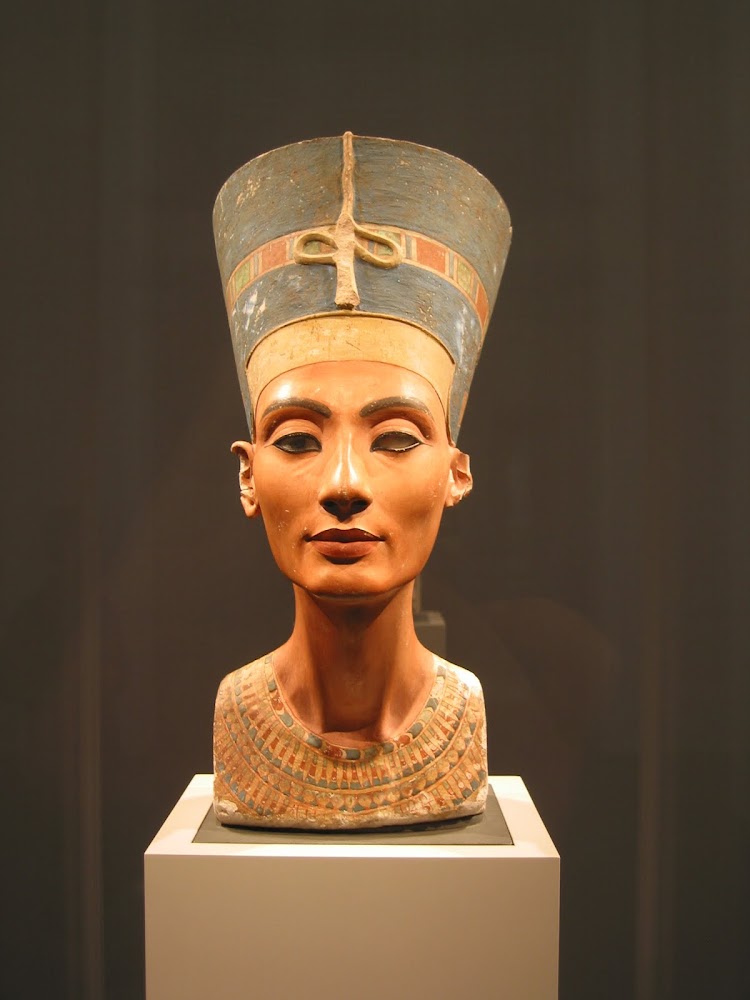
One of the most well-known works of ancient Egyptian art is the bust of Nefertiti (ca. 1370-1330 B.C.), wife of pharaoh Akhenaten.


When I spotted this tunic at the local Salvation Army, I immediately recognized the famous features.


Nefertiti and Akhenaten are noted in history for worshiping only one god: Aten, the sun disc.


The bust of Nefertiti that has given historians the most clear idea of her appearance was made by the sculptor Thutmose and now resides in the Neues Museum in Berlin.


A highly esteemed ruler, Nefertiti has become a symbol of ancient Egyptian art, as well as feminine authority. The name Nefertiti means "the beauty has come".


The bust itself is significant art historically because it represents the ancient Egyptians' realistic understanding of facial proportions. In the above relief of 1320-1200 BCE, also depicting Nefertiti, the more common stylized facial structure of ancient Egyptian art is evident.


I'm wearing a thrifted tunic made by "The African Scene" and a vintage necklace.


[Nefertiti images from davalablog.blogspot.com, amoeba.com, and history.com, respectively.]